

Find your right Bumper part
Over 120,000+ automotive and truck parts
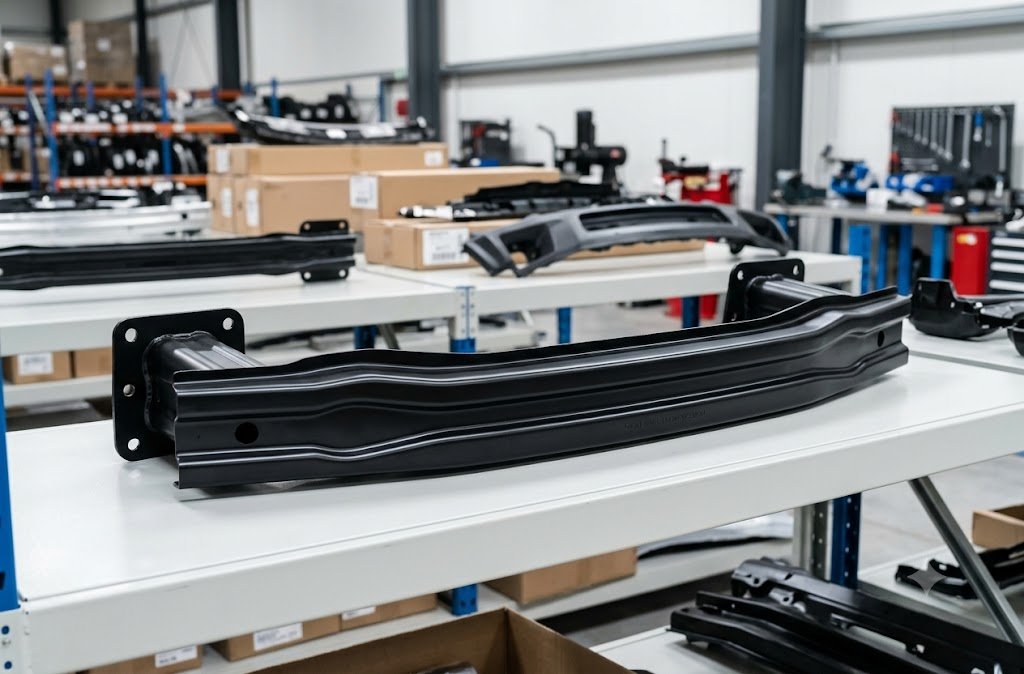
Used Front Bumper Reinforcement – Alpha Salvage – +1 (626) 693-3601 – Quality Used Bumper Parts
A used front bumper reinforcement can be a practical replacement when the original reinforcement is bent, damaged, or compromised after a collision.
Why the Reinforcement Matters
Positioned behind the bumper cover, the reinforcement provides important structural support for the front bumper system. In addition, it works with the energy absorber, mounting components, and surrounding vehicle structure during an impact.
Finding the correct replacement requires more than matching the general bumper shape. Therefore, check the vehicle year, make, model, trim, body style, VIN, and OEM part number whenever possible.
What Is a Front Bumper Reinforcement?
A front bumper reinforcement is a structural component positioned behind the exterior bumper cover. It supports the bumper system and connects with designated mounting points on the vehicle.
Key Functions of the Reinforcement
Although the component remains hidden after installation, it has an important role within the bumper system. For example, it can provide structural support while working with other impact-management components.
Structural Support
First, the reinforcement provides a strong support structure behind the bumper cover. Its shape and mounting design are developed for a specific vehicle application.
Impact Management
During a collision, the reinforcement works with the bumper absorber and other components to help manage forces. As a result, its condition should be checked after an accident.
Mounting Connection
The reinforcement attaches to specific mounting points on the vehicle. Consequently, incorrect mounting dimensions can create fitment and alignment problems.
Hidden Behind the Fascia
Finally, the reinforcement normally sits behind the visible bumper cover. Therefore, exterior bumper damage does not always reveal the condition of the reinforcement.
What Can a Used Front Bumper Reinforcement Include?
Used front bumper reinforcement listings can differ depending on the vehicle and supplier. Some listings contain the reinforcement alone, while others may include attached mounting components.
For that reason, review the listing details carefully before purchasing. Additionally, compare the available photographs with your original component whenever possible.
01 Reinforcement Bar
The main structural beam sits behind the bumper cover. Its length, shape, material, and mounting points can vary by vehicle.
02 Mounting Brackets
Some used reinforcement listings may include attached brackets or support pieces. However, these items should not be assumed to be included.
03 Structural Supports
Depending on the application, additional supports can connect the reinforcement with other front-end structural components.
04 Mounting Hardware
Bolts, clips, and other hardware may be associated with the bumper system. Nevertheless, individual fasteners may be sold separately.
05 Absorber Interface
The reinforcement works alongside the bumper energy absorber on vehicles equipped with this type of impact-management system.
06 Vehicle-Specific Mounts
Mounting holes, tabs, brackets, and structural connections can differ between vehicle applications. Therefore, exact fitment matters.
Front Bumper Reinforcement vs. Complete Bumper Assembly
Understanding the difference between these parts can make your search more precise. While both belong to the same bumper system, they serve different purposes and may be sold separately.
Used Front Bumper Reinforcement
A used front bumper reinforcement is the structural beam positioned behind the bumper cover. It may be suitable when the outer fascia remains usable but the reinforcement needs replacement.
- Structural bumper component
- Located behind the bumper cover
- Provides bumper support
- May be sold separately
- Requires vehicle-specific fitment
Used Front Bumper Assembly
A complete bumper assembly can contain several related components. Depending on the listing, it may include the bumper cover, reinforcement, absorber, brackets, grille pieces, or sensor mounts.
- May include multiple components
- Can include the outer bumper cover
- May include reinforcement
- May include absorber and brackets
- Exact contents vary by listing
Types of Used Front Bumper Reinforcements
Front bumper reinforcement designs vary according to vehicle size, body structure, model year, and equipment. As a result, identifying the correct type is an important step before ordering.
Passenger Car Reinforcements
These components are designed for sedans, coupes, hatchbacks, and other passenger vehicles. Their dimensions and mounting points vary by application.
SUV Reinforcements
SUVs and crossovers can use larger bumper structures with application-specific mounting arrangements. Therefore, model and trim details matter.
Truck Reinforcements
Pickup trucks may use different reinforcement shapes and attachment systems. Meanwhile, cab configuration and model year can also influence fitment.
Steel Reinforcements
Many bumper reinforcement components are manufactured from steel or other structural materials. However, construction varies according to the vehicle.
OEM Reinforcement Bars
Used OEM reinforcement bars come from original vehicle applications. Even so, verify the part number and mounting configuration before purchase.
Sensor-Compatible Configurations
Modern bumper systems can accommodate parking sensors, cameras, radar equipment, and other technology. Therefore, related equipment should be checked during fitment.
Signs You May Need a Front Bumper Reinforcement
A front-end collision can damage components that are hidden behind the bumper cover. Consequently, the outer fascia may appear repairable even when the reinforcement has been affected.
Visible Structural Damage
When the bumper cover is removed, certain forms of damage may become easier to identify.
- Bent reinforcement bar
- Severe dents or deformation
- Crushed mounting areas
- Damaged brackets
- Distorted mounting holes
Hidden Collision Damage
Some problems are not obvious from outside the vehicle. For example, mounting points can move or deform behind an otherwise repairable bumper cover.
- Uneven bumper gaps
- Misaligned bumper cover
- Displaced mounting points
- Damage found after fascia removal
- Signs of previous collision repair
How a Front Bumper Reinforcement Works
The front bumper should be viewed as a layered system rather than a single component. Each part has a specific function, and the reinforcement works together with the surrounding bumper components.
The Reinforcement Provides Support
First, the reinforcement creates a strong structural layer behind the outer bumper cover. It also helps maintain the position of the bumper system.
The Absorber Works With the Reinforcement
Next, the energy absorber can sit between the cover and reinforcement on applicable vehicles. During certain impacts, these components work together to manage energy.
Mounting Points Connect the System
The reinforcement attaches to designated points on the vehicle. Therefore, damaged or incorrect mounting locations can affect the bumper's final position.
The Cover Sits Over the Structure
Finally, the bumper fascia covers the reinforcement and related components. Proper alignment helps the exterior bumper sit correctly against the grille, headlights, fenders, and hood.
How to Inspect a Used Front Bumper Reinforcement
A used reinforcement should be inspected carefully because it is part of the vehicle's bumper structure. Before purchasing, review available photographs and compare the component with your original part.
What to Look For
Pay particular attention to bends, impact marks, corrosion, mounting holes, and other signs of previous damage. Additionally, ask about any condition details that are not clear from the listing photographs.
Inspect the Reinforcement Bar
- Look for bends
- Check for severe dents
- Inspect impact marks
- Look for cracks or deformation
- Check overall condition
Check Mounting Areas
- Inspect mounting holes
- Check brackets
- Look for distorted tabs
- Inspect attachment points
- Compare mounting locations
Review Corrosion and Wear
- Look for heavy rust
- Check for deep pitting
- Inspect exposed surfaces
- Review previous repairs
- Ask for additional photos
Before You Buy a Used Front Bumper Reinforcement
Correct fitment starts with accurate vehicle information. Although two vehicles may look similar, their bumper reinforcement designs can differ because of model year, trim, body style, or equipment.
Confirm Year, Make and Model
First, provide the exact vehicle year, make, and model. This information creates the starting point for identifying the appropriate reinforcement.
Check Trim and Body Style
Next, verify the trim and body style. These details can influence the bumper structure, mounting points, and related equipment.
Use the VIN When Possible
Additionally, provide the VIN whenever possible. A VIN can help narrow the search to the correct vehicle configuration.
Compare the OEM Part Number
Similarly, compare the OEM part number when it is available. However, verify vehicle compatibility as well because part numbers can be updated or superseded.
Check the Mounting Configuration
Moreover, compare the mounting holes, brackets, tabs, and attachment points with the original reinforcement. This step can help prevent a poor fit.
Confirm What the Listing Includes
Finally, check whether the listing includes only the reinforcement or also contains brackets, hardware, or other bumper components.
Look Beyond the Outer Bumper
At first glance, the front bumper may appear to be one large exterior component. However, several structural and impact-management parts can sit behind the visible fascia.
Therefore, inspecting the reinforcement is important after front-end damage. In addition, checking the absorber, brackets, mounts, and surrounding structure can provide a clearer picture of the repair required.

Popular Used Front Bumper Reinforcement Searches
Buyers may use different names when searching for a front bumper reinforcement. For example, listings can refer to the component as a bumper beam, impact bar, crash bar, or reinforcement bar.
Using several related search terms can make it easier to compare available parts. Additionally, combining the part name with your vehicle information can make the search more specific.
More Used Front Bumper Parts
A damaged reinforcement may not be the only component affected by a collision. Consequently, checking related bumper parts at the same time can help identify everything needed for the repair.
Used Front Bumper Cover
The outer fascia forms the visible portion of the bumper. If it has been damaged, a used replacement cover may be an option.
Used Bumper Energy Absorber
The absorber sits behind the cover on applicable vehicles. Therefore, inspect its condition after a collision before reusing it.
Used Front Bumper Brackets
Brackets help secure and align the bumper. Broken or distorted mounting pieces can create installation problems.
Used Front Bumper Assembly
A complete assembly can contain multiple bumper components. However, exact contents depend on the individual listing.
Used Front Bumper Support
Additional support components can connect the bumper system with the vehicle structure. Their design varies by application.
Used Grille
A front collision can also affect grille sections and related trim. Additionally, some bumper listings may include compatible grille pieces.
Warranty, Shipping & Returns
Used front bumper reinforcement terms can differ between suppliers. Therefore, review the specific part listing before placing an order.
Warranty
Warranty coverage can vary by supplier and component. For this reason, review the warranty terms associated with the specific reinforcement.
Shipping
A reinforcement can be a larger structural component, so packaging and shipping requirements may vary. Consequently, shipping cost and availability depend on the supplier and destination.
Returns
Return conditions depend on the supplier and part. Before ordering, check the applicable return policy and fitment requirements.
Condition
Used components can show signs of previous vehicle use. Nevertheless, the reinforcement should be reviewed carefully for bends, severe corrosion, impact damage, or distorted mounting areas.
Find a Used Front Bumper Reinforcement That Fits Your Vehicle
Need a used front bumper reinforcement after a collision or front-end repair? Alpha Salvage can help customers search for used OEM auto parts through a nationwide network of salvage yards.
Start your search with the vehicle year, make, model, trim, body style, and VIN whenever available. In addition, an OEM part number can provide another useful reference when comparing used bumper reinforcement bars and related structural components.
Verify Fitment Before Ordering
Before purchasing, confirm the reinforcement's mounting configuration, structural condition, part number, and exact listing contents. Furthermore, check whether brackets, hardware, or other bumper components are included. Taking these steps can help reduce fitment problems and unnecessary returns.
Frequently Asked Questions About Used Front Bumper Reinforcements
What is a front bumper reinforcement?
A front bumper reinforcement is a structural component positioned behind the bumper cover. It supports the bumper system and works with other components during certain impacts.
Is a bumper reinforcement the same as a bumper cover?
No. The bumper cover is the visible exterior fascia, while the reinforcement is the structural component located behind it. Therefore, the two parts should not be treated as the same component.
What is another name for a bumper reinforcement?
Depending on the vehicle or parts catalog, it may also be called a bumper beam, reinforcement bar, impact bar, crash bar, or bumper support.
What does a front bumper reinforcement do?
It provides structural support behind the bumper cover and works with the absorber and surrounding components to help manage impact forces.
Are used front bumper reinforcements worth buying?
A used OEM reinforcement can be a practical replacement when it matches the vehicle and is in suitable condition. However, fitment and structural condition should be verified first.
How do I know which bumper reinforcement fits my vehicle?
Start with the year, make, model, trim, and body style. Additionally, use the VIN and OEM part number when available to improve fitment accuracy.
Does the vehicle trim affect bumper reinforcement fitment?
It can. Different trims may use different bumper configurations, mounting points, or related equipment. Consequently, the trim should be confirmed before ordering.
Can I buy only the front bumper reinforcement?
Yes. A reinforcement can be purchased separately when the specific used component is available. However, check the condition of the other bumper parts as well.
Does a used bumper reinforcement include the bumper cover?
Usually, a reinforcement listing refers to the structural component rather than the exterior cover. Nevertheless, always confirm the exact listing contents.
Does a used bumper reinforcement include brackets?
Some listings may include attached brackets or mounting pieces. However, these components should not be assumed to be included unless the listing specifically states so.
What should I inspect on a used bumper reinforcement?
Check for bends, dents, impact damage, distorted mounting points, severe corrosion, and pitting. Also, compare the mounting configuration with your original part.
Can a damaged bumper reinforcement be repaired?
A collision-damaged reinforcement should not automatically be repaired or reused. Instead, follow the applicable manufacturer repair procedures and have the component evaluated by a qualified professional.
Should I replace the reinforcement after a collision?
If the reinforcement is bent, crushed, cracked, or otherwise compromised, replacement may be necessary. Therefore, inspect the complete bumper system after a significant collision.
What is a bumper impact bar?
A bumper impact bar is another term sometimes used for the structural reinforcement located behind the bumper cover.
What is a bumper crash bar?
A bumper crash bar is a term that can describe the structural reinforcement behind the front bumper fascia. Terminology varies between vehicles and catalogs.
Is a bumper reinforcement made of steel?
Many bumper reinforcements are made from steel or other structural materials. However, the material and construction depend on the vehicle application.
Can a bumper reinforcement rust?
Yes. Exposure to moisture, road salt, and other environmental conditions can lead to corrosion. Therefore, inspect a used reinforcement carefully before purchasing.
Does a bumper reinforcement affect bumper alignment?
It can. The reinforcement and its mounting points help support the bumper system, so damage or incorrect fitment can contribute to alignment problems.
Can I buy a used front bumper reinforcement by VIN?
VIN information can help identify the correct vehicle configuration. Therefore, providing the VIN along with the vehicle details can make the search more precise.
Why is the OEM part number important?
An OEM part number can help identify a specific component and application. However, part numbers can change or be superseded, so vehicle compatibility should also be verified.
How much does a used front bumper reinforcement cost?
Pricing varies according to the vehicle, model year, condition, availability, supplier, and shipping requirements. As a result, there is no single price for every used reinforcement.
Is a used bumper reinforcement cheaper than a new one?
A used reinforcement may provide a lower-cost alternative to a new replacement. Nevertheless, compare the complete purchase cost, including shipping and any required additional parts.
What should I check before buying a used bumper reinforcement?
First, verify the year, make, model, trim, VIN, OEM part number, mounting configuration, condition, included components, warranty, shipping, and return terms.
Does Alpha Salvage sell used front bumper reinforcements?
Alpha Salvage helps customers search for used OEM auto parts through a nationwide network of salvage yards. Availability depends on the specific vehicle and component.
Does Alpha Salvage ship used bumper reinforcements?
Shipping availability and cost depend on the supplier, component size, destination, and packaging requirements. Therefore, confirm shipping details for the specific part.
Do used bumper reinforcements come with a warranty?
Warranty coverage can vary by supplier and component. Consequently, review the warranty terms associated with the specific used reinforcement before purchasing.
What if my used bumper reinforcement arrives damaged?
Document the condition as soon as possible and contact the appropriate supplier according to the applicable return or warranty procedure. Additionally, keep photographs and packaging if requested.
Can bumper reinforcement damage affect other front-end parts?
Yes. A collision that damages the reinforcement may also affect the bumper cover, absorber, brackets, grille, sensors, lights, or surrounding structural components.
Do modern vehicles have special bumper reinforcement configurations?
Modern vehicles can have bumper systems designed around sensors, cameras, radar equipment, lighting, and other technology. Therefore, related equipment should be checked before ordering.
Should I match a bumper reinforcement by appearance?
No. Appearance alone is not a reliable way to confirm structural fitment. Instead, use vehicle information, mounting points, VIN details, and OEM part numbers.
Why should I confirm what comes with the reinforcement?
Used listings can vary in their contents. Therefore, confirming whether brackets, hardware, or other components are included helps you understand what additional parts may be required.